Alpona, flow of nature.
In the quiet rhythm of hand and pattern, Alpona becomes more than art—it becomes flow, presence, and a dialogue with nature. This piece reflects on a self-taught journey rooted in tradition yet guided by instinct.
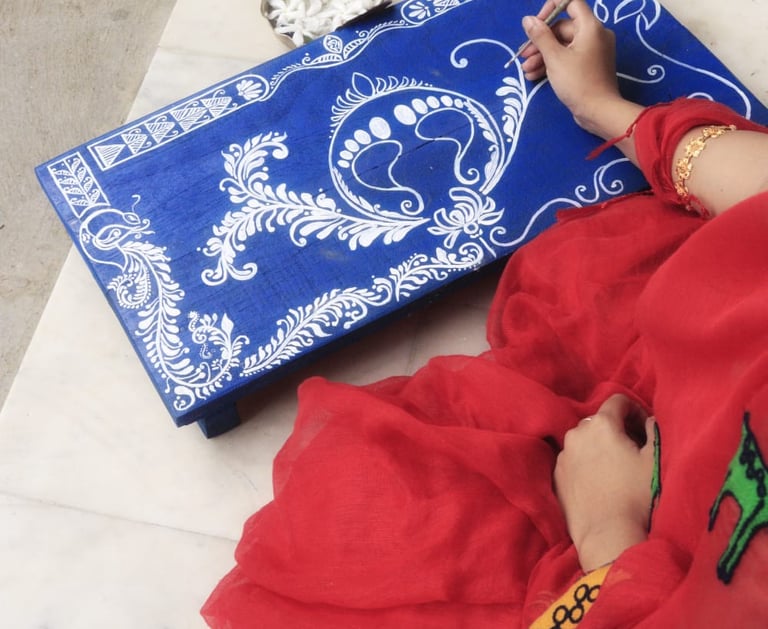
I am thankful that I learned alpona on my own, without any formal teaching. The very purpose of alpona is to understand the flow of nature and the movement of one’s hand. In the same way, as part of the natural flow of life, alpona eventually found me.
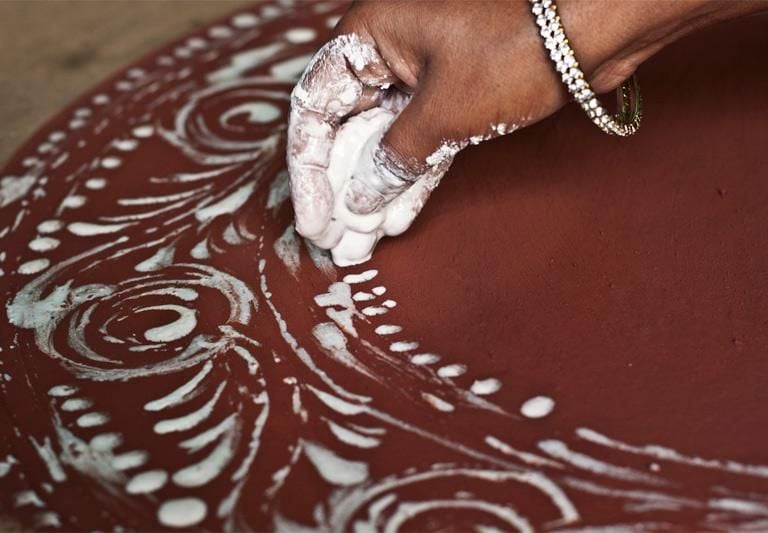
Amidst the chaos of art college, I found solace in alpona (also known as kolka). It taught me to be present and to move with the flow of life. While I never learned its official rules, I instinctively knew it was about nature—things like flowers, leaves, spirals, and an abundance of circles. However, it allows so much freedom that you can create different geometrical shapes as well. There are no rules to it, just as nature itself has none.
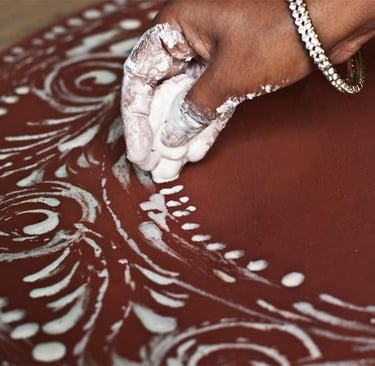
Traditionally, Alpona is a cultural art form where a paste, made from rice flour and water, is painted by hand using a small piece of cotton or cloth. As a kid, I found it so fascinating that I practiced it constantly. It has become my signature artistic style, where I focus purely on creating intricate patterns.
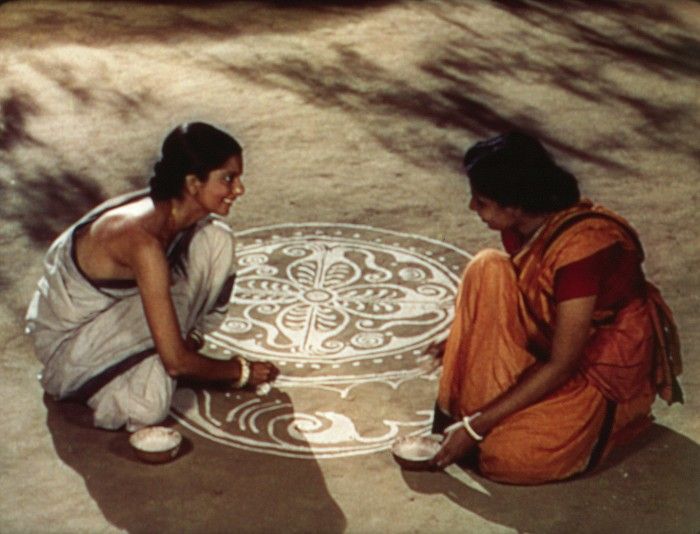
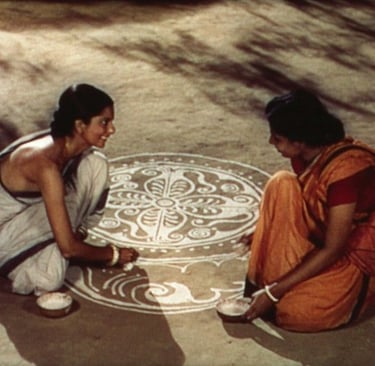
This beautiful practice has ancient roots in the Bengal region of India and is a form of ritualistic folk art. Historically, it was drawn by women on floors, courtyards, and walls during auspicious occasions and religious festivals, especially for Lakshmi Puja and weddings. The primary purpose was to welcome deities into the home, sanctify the space, and bring good fortune and prosperity to the family.
The motifs are almost always inspired by nature—lotuses, leaves, fish, owls (the vehicle of Goddess Lakshmi), and the footprints of the goddess herself are common themes. This free-flowing art form, passed down through generations, was traditionally ephemeral, meant to be washed away with the activities of the next day. However, in the 20th century, artists like Nandalal Bose and others associated with Santiniketan played a crucial role in reviving and elevating Alpona from a folk tradition into a celebrated form of modern Indian art. For me, just as for them, it has always been about the profound connection between the hand, the patterns, and the flow of nature.
Do let me know if you like Alpona too…